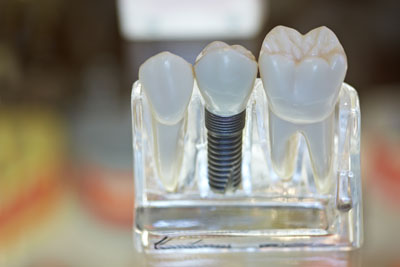
We can use dental implants to replace the root of a tooth. When a tooth falls out, you also lose the root, which plays a vital role in the overall function and appearance of the mouth. More importantly, for us, the root is the base on which a tooth gets its strength and stability. In order to mimic the symbiotic relationship between the jawbone and the root. This relationship ensures that we have the adequate amount of strength for a new tooth.
There are any number of reasons to choose a dental implant. They are extremely easy to clean and one merely needs to follow his or her daily oral health routine. Dental implants give an individual the ability to eat whatever he or she wants with no dietary change requirements. Dental implants will ensure that the individual's quality of life stays the same. For some patients, the fact that they will not have to mess around with removing these prosthetics is sufficient reason to switch. Whatever the reasons for wanting a dental implant, one of our San Francisco dental office's primary goals are to ensure that patients leave with a tooth that looks great and functions just like natural teeth.
A proven method to replace missing teeth
Since dental implants last for many years, they are simply the best way to replace lost or missing teeth. Popular culture has caught on to the idea that it is possible to have perfect teeth. This common knowledge is very helpful for patients who come in with some understanding but needing to know more about the process, the types of implants that are available, and other important questions like how well implants work.
Most patients, for example, have no idea that there are two different types of dental implants which are based on how well the jawbone can support a dental implant. Normally, we use an Endosteal implant, which inserts the titanium implant directly into the jawbone. The dental implant is cylindrical in nature, like a screw. For some patients, however, there is not enough bone density to support the implant. In cases like this, we can either perform a jaw restoration surgery or use an implant called a Subperiosteal implant. A Subperiosteal implant is placed underneath the gum but actually rests on, or is placed slightly above, the actual jawbone.
Every patient that comes in for dental implants is unique
The initial consultation and examination are key to determining several factors. Another example of this is the fact that there are two different methods of placing dental implants based on how many steps each one takes. A one-step placement occurs when the dentist simply covers the implant with tissue and allows it to heal naturally.
A two-step placement involves the dentist covering the implant protrusion with a healing abutment. The tissue and bone then heal around the healing abutment. In either of these cases, the recovery takes between four and six weeks.
Dental emergencies can happen without warning. A sudden toothache, broken tooth, fractured tooth, swollen gums, or damaged restoration can quickly disrupt your day and leave you wondering what to do next.If you are looking for a San Francisco emergency dentist, the most important step is to get professional guidance as soon as possible. Dental pain…
An implant crown is the top part of a dental implant that connects to the abutment and titanium rod. It is also a type of dental restoration that can support, strengthen, and protect a tooth. On its own, a dental crown is a good dental helper. It is for people who want to regain the…
Dental implants are becoming a very popular choice for replacing missing teeth. Many patients ask about implants because they are known to look and feel the most like natural teeth. Any person could need to replace a missing tooth or teeth for a variety of reasons. You may not have kept up on your oral hygiene…
A missing tooth can lead to many cosmetic and health complications. Dental implants are an effective method for treating tooth loss and restoring a person's smile. They can prevent other issues from developing, including: Speech and digestive problems Damage to surrounding teeth Improper alignment Tooth and jaw pain The results are typically permanent, and implants…
Botox is often associated with smoother skin and a refreshed appearance, but its benefits can go beyond cosmetic treatment. In dentistry, Botox may also be used to help patients who struggle with jaw tension, clenching, teeth grinding, and certain types of facial muscle pain.If you are searching for Botox San Francisco, you may be looking…
A brighter smile can make you look refreshed, confident, and more polished. But with so many whitening strips, toothpastes, gels, and online trends available, it can be difficult to know what actually works and what is safe for your teeth.That is where a professional teeth whitening dentist can help. Dentist-supervised whitening is designed to brighten…
 We can use